Expert TMD Care — Annapolis, MD

(410) 626-9680
Annapolis TMJ · Neuromuscular Dentistry

Relief from jaw painstarts with the right diagnosis.

Dr. Ishita Rahman is an expert in TMD — the jaw disorder that causes pain, headaches, clicking, and disrupted sleep. She has helped patients from across the DC, Baltimore, and Annapolis region find lasting relief after years of searching for answers.

Request an Evaluation

Dr. Ishita Rahman, DMD · Annapolis, MD

We will call within one business day. No obligation.

DMVRegion Served
100%TMD Focused
NMDNeuromuscular Approach
Fee-for-ServicePersonalized Care

The pain that others have missed

TMD is one of the most underdiagnosed conditions in dentistry. Its symptoms mimic other conditions — which is why so many patients spend years seeking answers from providers who are not looking in the right place.


If any of these sound familiar, you are not imagining it — and you are not out of options.

Jaw Pain

Pain in or around the jaw joint — especially in the morning, or when chewing.

Chronic Headaches

Recurring headaches, often upon waking, that have not responded to standard treatment.

Clicking / Popping

Audible clicking or popping when opening or closing your mouth.

Neck & Shoulder Pain

Tension that radiates from the jaw into the neck and shoulders — a direct muscular connection.

Ear Symptoms

Ear pain, fullness, or ringing (tinnitus) with no identified ear pathology.

Sleep Disruption

Difficulty sleeping due to clenching, grinding, or jaw discomfort.

Limited Opening

Difficulty opening your mouth fully — sometimes accompanied by a sensation of locking.

Understanding TMD

Millions of people live with TMJ disorders without knowing what is causing their pain. Understanding the condition is the first step toward relief.

10M+

Americans affected by TMD — many without a diagnosis

3–5

Providers the average TMD patient sees before receiving an accurate diagnosis

What Is TMD?

The jaw joint and why it fails

The temporomandibular joint (TMJ) connects your jaw to your skull. When this joint — and the muscles that control it — are not working in harmony, the result is TMD. It is not simply a dental problem. It is a system problem.

Why It Happens

Multiple causes, one system

TMD has many contributing factors: bite misalignment, muscle tension from chronic stress, trauma or injury, repetitive habits like clenching, and sometimes genetic predisposition. Often, it is a combination acting together over time.

The Cascade Effect

Why symptoms spread

The jaw is connected to the neck, skull, and spine through a network of muscles. When the jaw system is out of balance, pain and tension radiate — which is why TMD patients often present with headaches, neck pain, and ear symptoms that seem unrelated.

Why Relief Is Possible

This is treatable

With the right diagnosis and neuromuscular approach, most TMD patients achieve significant, lasting relief. The key is identifying the root cause — not managing symptoms. Dr. Rahman has helped many patients who had given up hope.

From first symptom to lasting relief

Most TMD patients have a longer journey than they should. Dr. Rahman compresses that timeline by using a comprehensive diagnostic approach from the first appointment.

01

Recognize

Identifying that your symptoms may be TMD-related is the critical first step. Many patients arrive after years of misattributed pain.

Jaw pain · Headaches · Ear symptoms · Clicking
02

Evaluate

Initial consultations are held Friday mornings. Dr. Rahman reviews your complete medical history and discusses treatment objectives before any diagnostic technology is introduced.

Friday consultations · Medical history · Treatment planning
03

Treat

A 2-hour TENS session relaxes jaw muscles and establishes physiologic rest position. CT scanning, facial measurements, and bite registration follow — resulting in a custom neuro-muscular orthotic that corrects the underlying mechanical dysfunction, not just the symptoms.

TENS therapy · CT scan · Structural correction
04

Maintain

Long-term success requires the right maintenance plan. Dr. Rahman works with you on bite habits, lifestyle factors, and scheduled follow-ups to protect your results.

Follow-up protocol · Lifestyle guidance · Monitoring
TENS neuromuscular therapy session
TENS — Finding Your Neuromuscular Balanced Bite
TENS (transcutaneous electrical neural stimulation) relaxes overworked jaw muscles and establishes a physiologic rest position — a critical step before bite registration and orthotic fabrication.

Neuromuscular dentistry — a different way of seeing the jaw

Most dentists are trained to look at teeth. Neuromuscular dentistry looks at the entire system — teeth, muscles, joints, and nerves — and how they function together. This broader view is what makes diagnosis possible where others see only confusion.

Whole-System Thinking

Rather than treating symptoms in isolation, Dr. Rahman evaluates how every component of the jaw system interacts. A misaligned bite can cause muscle fatigue that radiates pain far from the jaw.

Diagnostic Precision

Neuromuscular dentistry uses objective measurement — not just patient-reported pain. EMG, joint vibration analysis, and computerized bite assessment give Dr. Rahman data, not guesses.

Cause, Not Symptom

Standard care often manages TMD symptoms — pain relief, night guards, anti-inflammatories. Neuromuscular treatment corrects the underlying mechanical issue, which is why the results last.

Patient-Centered Protocol

Dr. Rahman's evaluation is thorough because the condition demands it. She takes time to understand your full history, listens carefully, and explains her findings in plain language before any treatment decision is made.

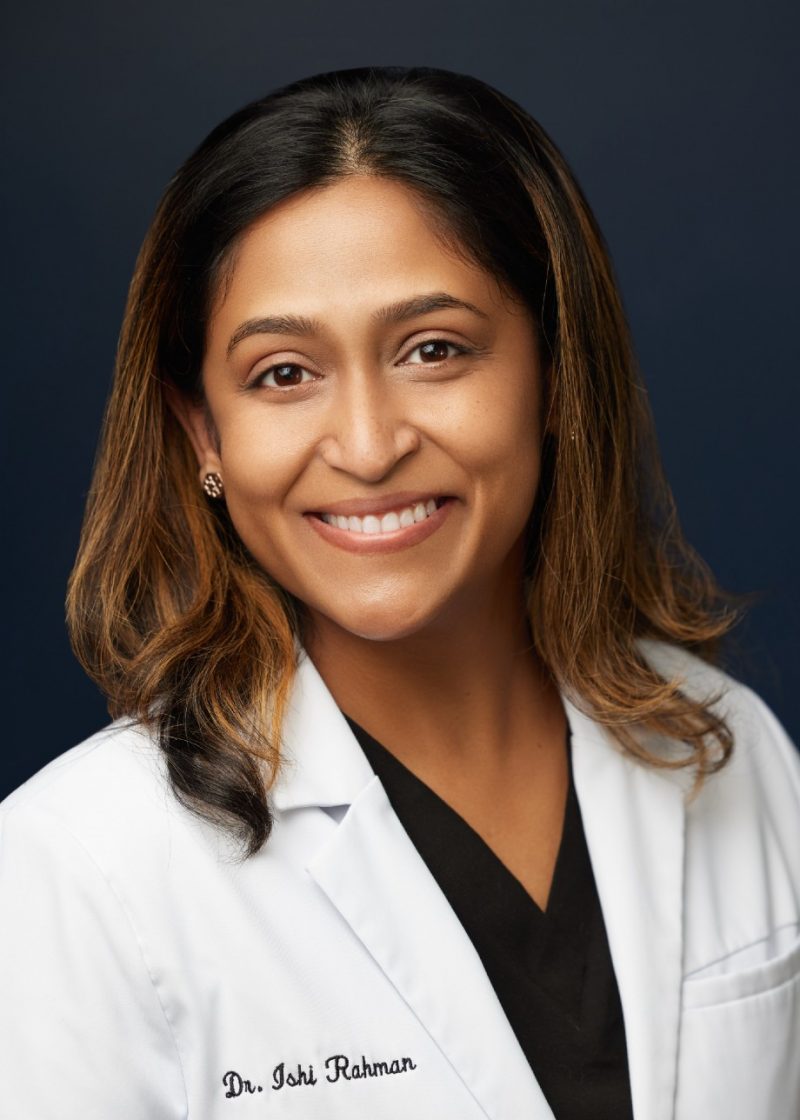
Dr. Ishita Rahman, DMD, FICOI

Dr. Ishita Rahman

DMD, FAGD, FICOI · TMD Expert

  • Fellowship, International Congress of Oral Implantologists
  • Advanced training in neuromuscular dentistry
  • General dentistry background — whole-patient perspective
  • Personal experience with TMD — shapes her empathy and approach
  • Exclusively TMD-focused practice
Dr. Ishita Rahman
100%
TMD Focused

Why she chose to specialize in TMD

Dr. Rahman began her career as a general practitioner. She expanded into implant training, then explored orthodontics — always seeking to broaden how she could help patients.

What she kept noticing was a pattern: patients arriving in pain, having been told nothing was wrong. Jaw symptoms dismissed as stress. Headaches attributed to everything except their jaw. People suffering without a path to relief.

She started specialized training in neuromuscular dentistry — and discovered something that changed the direction of her practice. Many of these patients had treatable TMD that had never been properly diagnosed.

Her commitment deepened when she recognized the condition in herself. Having experienced TMD firsthand, she understands what patients carry into her office — not just symptoms, but frustration, skepticism, and the quiet hope that this time might be different.

That empathy is now the foundation of her practice. Countless patients have found relief under her care. It drives every treatment decision she makes.

“When a patient tells me they have been told it is just stress, I take that seriously — because I know how long that path can be, and how unnecessary it is when the right care is available.”

— Dr. Ishita Rahman, DMD

Finding answers with precision

Dr. Rahman uses advanced neuromuscular diagnostic tools to build an objective picture of your jaw system — not just what you report feeling, but what is measurably happening.

CBCT Imaging

Cone beam computed tomography provides three-dimensional imaging of the jaw joint, allowing Dr. Rahman to assess bony structures, disc position, and joint space with precision that standard X-rays cannot provide.

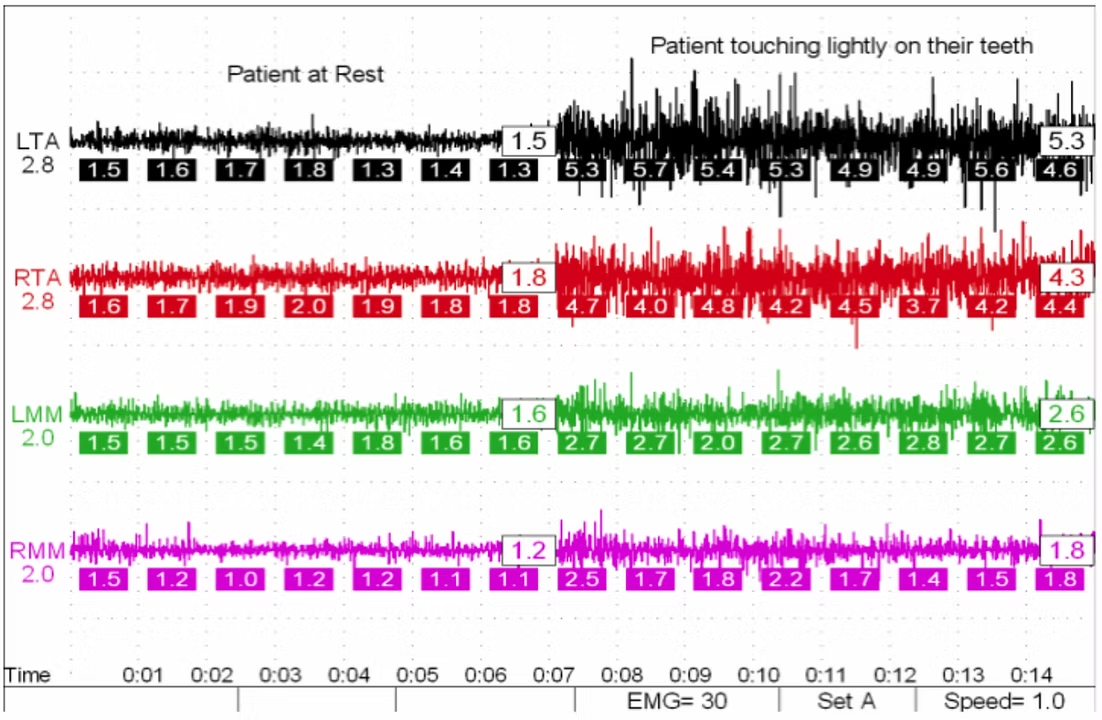
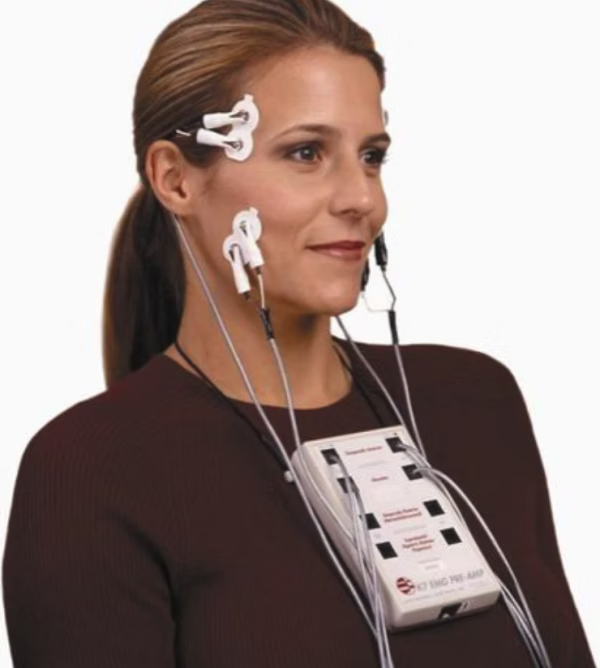
Electromyography (EMG)

EMG measures the electrical activity of the jaw muscles. It reveals muscle hyperactivity, imbalance, and fatigue patterns — objective data that explains why you feel pain even when everything looks normal.

Joint Vibration Analysis

This non-invasive assessment measures vibrations in the jaw joint during movement, identifying friction, clicking, and displacement patterns that help characterize the condition and guide treatment planning.

Computerized Bite Analysis

Digital bite analysis measures the timing, force, and distribution of your bite contacts. Bite imbalance is often the root mechanical cause of TMD symptoms — and this technology makes it measurable.

Comprehensive History

No technology replaces a thorough patient history. Dr. Rahman takes time to understand the full picture — when symptoms began, what triggers or relieves them, previous treatments, and how the condition affects your life.

Clinical Examination

Palpation of the jaw muscles and joint, range-of-motion assessment, and visual evaluation of the teeth and bite remain foundational. Dr. Rahman integrates clinical findings with diagnostic data for a complete assessment.

K7 3D jaw tracking system

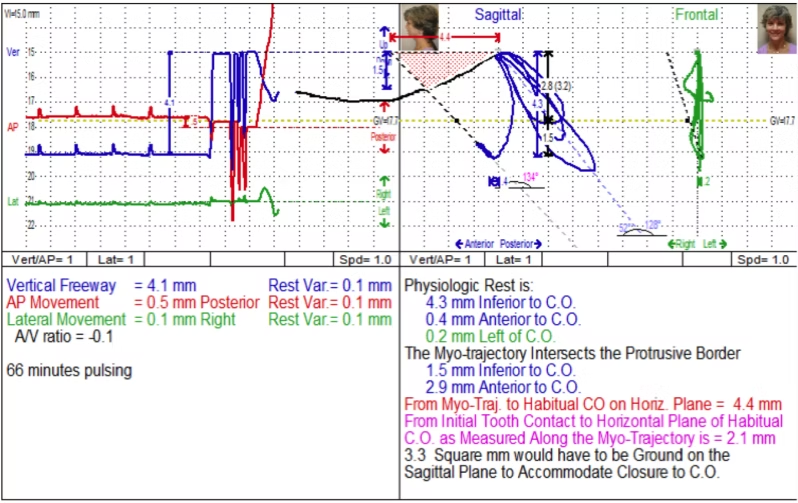
K7 3D Jaw Tracking · Electrognathography

Advanced Digital Jaw Tracking

K7 jaw tracking analysis readout

K7 Analysis Readout · Mandibular Movement

Therapeutic Botox for TMD

When jaw pain is disrupting your sleep, your focus, and your daily life — you need relief now. Not after months of treatment.

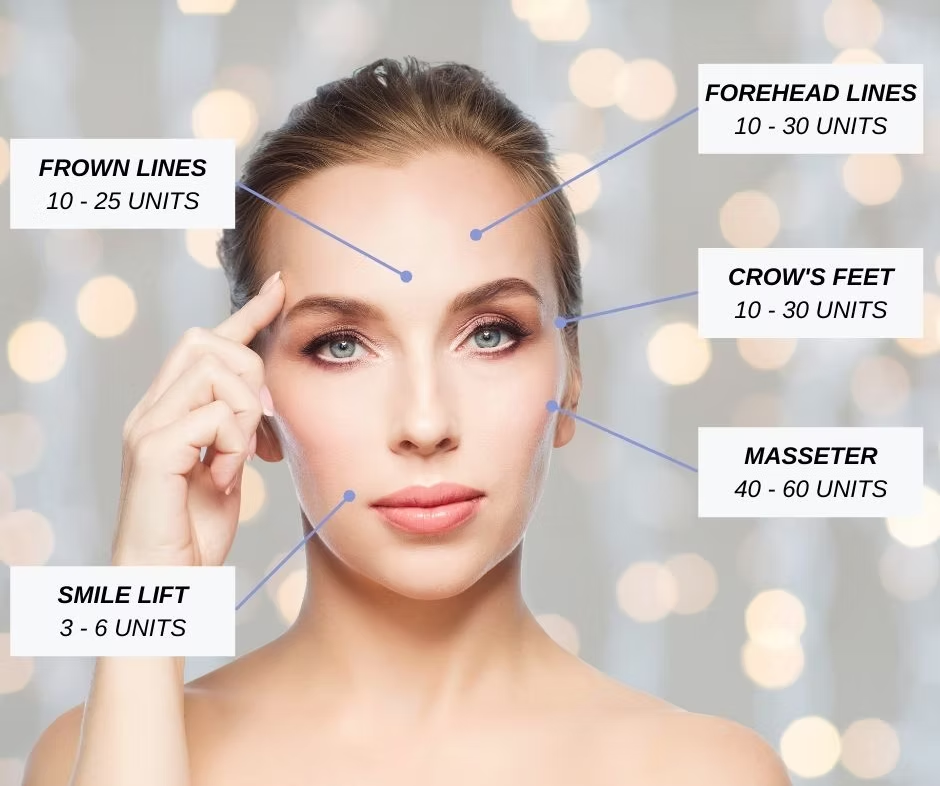
Therapeutic Botox (BoNT) acts within one to two days, creating an immediate window of relief while your neuromuscular treatment addresses the root cause. It is temporary by design — a bridge that makes recovery possible without suffering through it.

Immediate Relief

Works within 24–48 hours

Botulinum toxin injected into the jaw and neck muscles blocks the nerve signals driving involuntary clenching and grinding. Most patients feel meaningful relief within one to two days. Full effect visible within three to five days.

Temporary by Design

A bridge, not a cure

Each treatment remains active for up to three months. This window of muscular relief is intentional — it allows the jaw system to reset and makes the longer neuromuscular treatment easier to tolerate and complete.

Breaking the Cycle

Habit correction over time

After two to three treatment cycles, many patients find they have broken the grinding and clenching pattern entirely — even after the Botox has worn off. Cosmetic improvements in facial contour may develop as the overworked muscles relax.

Scheduling

Available Wednesdays and Thursdays

Botox appointments are offered on Wednesdays and Thursdays. Same-day treatment is possible when scheduling permits. Whether used alongside orthotic therapy or as standalone relief, Dr. Rahman will advise on the right sequencing for your case.

Therapeutic Botox treatment planning
Two Paths, One Goal

Botox — immediate, temporary relief.Interrupts the pain cycle within days. Used when symptoms are severe enough to affect daily function, or as a bridge during neuromuscular treatment.

Orthotic therapy — permanent structural correction.The neuro-muscular orthotic addresses the underlying mechanical dysfunction — why the jaw is failing — producing results that last.

What relief looks like

Real accounts from patients who found answers at Annapolis TMJ after searching elsewhere.

★★★★★

I had been to three different doctors over two years. Everyone told me my headaches were stress. Dr. Rahman spent an hour with me on the first visit. Within two weeks, I slept through the night for the first time in years.

S
Sarah M.
Annapolis, MD
★★★★★

The clicking in my jaw had gotten so bad I was embarrassed to eat in public. Dr. Rahman explained exactly what was happening — not just symptoms, but the actual mechanics. I have not had an episode in six months.

J
James T.
Silver Spring, MD
★★★★★

I drove from Northern Virginia because a colleague recommended Dr. Rahman. Her diagnostic process is unlike anything I had experienced — thorough, methodical, and completely explained at every step.

P
Priya K.
Arlington, VA
★★★★★

My neck pain and jaw clenching had become a daily battle. I thought I just had to live with it. Dr. Rahman showed me that was not true. Three months in and my quality of life has changed completely.

R
Robert H.
Bethesda, MD
★★★★★

I had tried everything — night guards, physical therapy, medication — and was skeptical. Dr. Rahman's neuromuscular approach was different in every way. She found what no one else had looked for.

M
Michelle D.
Baltimore, MD
★★★★★

What struck me most was that Dr. Rahman listened. Really listened. Not just to my symptoms, but to how they affected my life. That empathy, combined with her clinical expertise, is rare.

D
David L.
Annapolis, MD

Patients travel to Annapolis for this level of care

Specialized TMD expertise is rare. Patients from across the DC, Maryland, and Virginia region come to Dr. Rahman because she offers something most practices do not — a focused, neuromuscular approach to jaw disorder diagnosis and treatment.

Annapolis

Home office location

Washington, DC

45 min drive

Baltimore

30 min drive

Northern Virginia

55 min drive · Arlington, McLean, Fairfax

Silver Spring

35 min drive

Bethesda

40 min drive

Southern Maryland

30 min drive · Prince George's, Calvert

Eastern Shore

35 min drive · Kent Island, Easton

Annapolis TMJ

888 Bestgate Rd Suite 101, Annapolis, MD 21401

Patients are seen at Dr. Rahman's BITE Dental Center office.

(410) 626-9680

What patients ask before their first visit

TMD stands for temporomandibular joint dysfunction — a condition affecting the jaw joint and surrounding muscles. Common signs include jaw pain, clicking or popping when you chew, headaches upon waking, neck or ear pain, and limited mouth opening. Many patients live with TMD for years without a diagnosis. A comprehensive evaluation with Dr. Rahman is the definitive way to know.
Traditional dentistry focuses primarily on the teeth. Neuromuscular dentistry examines the entire jaw system — how the muscles, joints, and bite interact and affect each other. Dr. Rahman uses this approach to find root causes that standard exams miss, which is why patients who have seen multiple providers often finally find answers here.
The comprehensive evaluation is non-invasive and should not be painful. Dr. Rahman will take a detailed history, gently examine your jaw muscles and joints, assess your bite and range of motion, and use diagnostic instruments. The goal is to understand your situation fully — not to cause discomfort.
Annapolis TMJ is a fee-for-service practice. We do not bill insurance directly, but we provide detailed documentation that patients can submit for potential reimbursement. Many patients find that the level of personalized attention in a fee-for-service model is what enables Dr. Rahman to provide the thoroughness that gets results.
Treatment duration varies significantly based on the complexity and duration of your condition. Some patients experience meaningful relief within weeks; others require a longer treatment phase. Dr. Rahman will give you a realistic picture of your timeline after the evaluation — she will not leave you guessing.
No referral is required. Patients can self-refer directly. If you are a healthcare provider who wants to refer a patient, we have a streamlined referral process and commit to detailed post-treatment communication.
Over-the-counter and standard custom night guards treat a symptom — clenching or grinding — but do not address why it is happening. Dr. Rahman's neuromuscular approach identifies the underlying bite misalignment or muscular dysfunction that drives the behavior. Treatment addresses the cause, not just the symptom.

A partner for your complex jaw cases

Dr. Rahman welcomes referrals from dentists, orthodontists, ENTs, neurologists, and primary care physicians. She focuses exclusively on TMD — which means your patients receive specialized care, and you receive detailed communication about their progress and outcomes.

She does not perform myofunctional therapy. Her scope is neuromuscular TMD diagnosis, treatment, and therapeutic Botox for TMD. Patients typically return to your practice for ongoing general care following their treatment phase.

  • 1Submit a referral via the CareStack form or call our office directly.
  • 2We will contact your patient within one business day to schedule a comprehensive evaluation.
  • 3Dr. Rahman sends a detailed findings and treatment summary to your office upon completion of evaluation.
  • 4You receive progress updates at key treatment milestones. Patient returns to you for general care.

Submit a Referral

Use our CareStack referral form for streamlined intake. All referral information is reviewed within one business day.

Open Referral Form Call to Discuss a Case
ANNAPOLIS TMJ · NEUROMUSCULAR DENTISTRY

You have been patient long enough.

If jaw pain, headaches, or clicking have been part of your life for months or years — a comprehensive evaluation is the first step toward understanding what is actually happening.

(410) 626-9680
Fee-for-service — no insurance barriers
No referral required
Serving DC, Baltimore, and the DMV region
Exclusively TMD-focused
(410) 626-9680